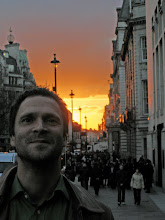
We’ll always have Paris II
When Bogey uttered those immortal words, which sealed the doom for his immediate happiness, but ensured the eternal flame of romance’s most iconic (un)happy ever afters, the choice of location was far from arbitrary. Or rather, the fact that it was Paris and not, well… [substitute just about any location] … plays no small part in the potency of his romantic renunciation. Paris, occupied by barbarians, was a precious, fragile treasury of all that was worth fighting for, and returning to in peace time. Paris is always somewhere to return to in peace time, in spring time, in love time. Paris is always always.
This is the first major icon / cliché of romance I’ve attempted to take on, on its own right. I’m not really capable of doing justice to it, as this is a big big question, the surface of which I can only skim here (like the creamy foam on a Café au lait, grazed dreamily a a Boulevard Café). You see, it’s very difficult not to employ clichés when dealing with Paris, and especially so when tackling the whole Paris = romantic platitude. It is perhaps one of the biggest truisms in romance’s repertoire, and one of the most consistent and coherent ideas ever held about a place. Although we have pretty clear ideas about New York, Rome, Tokyo, London, only Paris has a universally agreed adjective attributed to it.
But why, and, more importantly, when? If I had time, and the British Library had been open when I was pondering this question, I might have backed up the following speculations with a bit of substance. I might just do that when I get the chance; but now I’m going to hazard a guess it was between the wars when Paris became officially ‘romantic’. This idea was obviously fully-formed by 1942, but I don’t think was there in the 19th century, and was certainly not there before that. Paris was sexy, racy, daring, naughty before ‘romantic’ became its official descriptor. This might have contributed to and evolved into the later idea, but it had a different association and value at the time. It meant licence and libertarianism to the Anglo-American imagination, stifled by puritan propriety and prohibition. And this was firmly associated with a progressiveness. Paris was a modern city. It had chopped heads off kings, planned its streets on rational lines, and was at the forefront of what we would now quaintly call ‘sexual permissiveness’. Finally, the official style of Paris’s greatest, most iconic moment was self-consciously Nouveau.
New is not romantic. Paris became romantic when the rest of the world underwent its own revolutions and cataclysms, and Paris was looked to to embody and preserve a vanishing or just vanished order. Fortunately for the rest of the world, the conservative, chauvinistic side of the French mentality came to the fore, and decided to deliver on our demands, and manage the Paris brand rigorously by allowing very little change. The periphique stops it sprawling, like London; the French mind rightly resists the incursion of Starbucks et al., and someone in the planning dept at the Hôtel de Ville, has obviously decreed that the river skyline will change over his dead body. I’m pretty much certain that I could stand on the Pont de la Tournelle and look at Notre Dame and beyond tomorrow, and find the view pretty much as I left it exactly four years ago. Which is exactly what I intend to do, as I’m going to Paris on a flying visit, and this is why I’m prompted to prematurely pontificate on this question.
Paris is romantic because it has made the preservation of an epoch, la belle epoch, part of its official identity, and sealed the idea in. And it is this we re-visit, in recollection, and reality. ‘At the age of 37, she realised she’d never ride through Paris, in a sports car, with the warm wind in her hair’ ('Ballad of Lucy Jordan') - never really love, in other words. Not like Bogart and Bergman (I’m sure it’s a reference to Casablanca, and the flashbacks to Rick, actually smiley and looking soppy at Ilsa in an open top car). Last Tango in Where? Why not Buenos Aires? As it nearly all takes part in an apartment, truly it could have been anywhere. But then, truly it couldn’t.
Talking of apartments, there is a very stylish French Film called L’Appartement, which I’ve seen about 3 times now, and I still can’t work out exactly what goes on. It’s some kind of tricksy mystery about the exchange of identities between two very saucy and chic brunettes, who are chased all over Paris by a young man. The problem is, I can’t pay attention to the plot, as I’m too busy following two very saucy and chic brunettes all over Paris, and couldn’t give a stuff about the intrigue. The first time I saw it I wandered out of the cinema in a daze, and couldn’t speak for about 10 minutes. I swear, if I’d had my passport with me, I’d have caught the first Eurostar to Paris and joined in the sport. No mater how saucy the ladies, I would not have considered boarding a train so recklessly to anywhere else.*
Eurostar. Now there’s a romantic spot. Forget about that simply absurd statue they’ve erected. Sit there one afternoon in a bar; drink Champagne, and simply watch the trains depart. Sigh, dream, recollect, regret, and have another sip of Champagne, and watch another train. One day, just maybe… with the warm wind in your hair.
* A few years after watching that film, indeed a few months after my Faintheart at Holborn Tube incident nearly 8 years ago, I went to Paris, and met a young lady in a shoe shop. She was working there while a student, and the shoes were rather nice. I bought 2 pairs out of guilt for having spent so long chatting to her, and we spent the next year taking it in turns to commute by Eurostar. And then? Well, I think I have one of the shoes somewhere.
Showing posts with label romance. Show all posts
Showing posts with label romance. Show all posts
Tuesday, 6 January 2009


Monday, 29 December 2008
 Woman recovered, then given away - We’ll always have Paris
Of course I need to delay completing my post on Before Sunrise / Sunset (after all, Linklater took 9 years to complete the romance between Jesse and Celine, so I have plenty of scope), which would take us to Paris. So I thought I’d ponder on a classic variation on this regret-renunciation-remembrance = romance thread: Casablanca.
Too obvious? Forgive me, but I’m just back from Morocco (albeit Essaouira), where I went to escape the horror of Christmas, and to restore the true meaning of the festival with a bit of sun worship. And while I was there I read Tahir Shah’s book The Caliph’s House, about his adventures living in the city where the film is supposedly set. He relates encountering a mad American who travels the world watching the film everywhere it is playing, and who declares it the greatest film ever made. Many would agree, as it still tops the favourite film ratings, suggesting it still has the power to stir us 65 years after it was made.
I think this is down to the way it combines the archetypal with the historical and topical. The classic love-triangle is as old as romance itself (as Lancelot and Guinevere at least), but is enriched by the war-time conflict between personal desire and patriotic duty. And as time goes by (sorry), that period itself, and certainly its setting in what was once the Art Deco jewel of French North Africa, have acquired their own Romantic veneer as an epoch to sigh after. Who wouldn’t wish to walk into that particular gin joint, swathed in stark film noir ambiance, and hear the tinkle of that piano, just about to play that song? Memory, melancholy, a certain melody, borders, crossroads, danger, the exotic orient - the film is a veritable tagine of Romance, spiced with all its essential ingredients. OK, on the ‘oriental’ side it may be, as Tahir Shah points out, a farrago of Hollywood fantasy of old Arabia, whereas ‘the Casablanca of the time was European from top to toe’. But I’m dealing with romance here, not reality, and exaggeration and fantasy are the life blood of this concept, and add to the film’s enduring appeal.
I’m not going to just witter on about the film, or about orientalism and Romance, as I’m qualified to do neither. I’m interested in that line, ‘We’ll always have Paris’ muttered while an engine roars in anticipation of departure. This brings us to the next leg of our journey started by faint-hearted Hardy not getting off that train. ‘We’ll always have Paris”. Always is a tricky concept in the Romance repertoire. This is what Wilde’s Lord Henry has to say about it In Dorian Gray: “Always!. That is a dreadful word. It makes me shudder when I hear it. Women are so fond of using it. They spoil every romance by trying to make it last for ever”. Yet we’re not talking about the happy-ever-after always of clinging anticipation, but of fond recollection. The past is redeemed by Ilsa walking into that gin joint and restoring their memories of Paris.
Here we are again, at the crossroads of Romance, and an engine is already running. Rick reasons that Ilsa should get on that plane along similar lines to Jesse suggesting Celine get off that train - the projected anticipation of regret. But with a difference here. “If that plane leaves the ground and you're not with him, you'll regret it. Maybe not today. Maybe not tomorrow, but soon and for the rest of your life.” Wise-cracking cynical Americans moulding the destinies of dreamy Europeans are evidently not all alike. There’s a war on, don’t you know, and so personal Romance is commandeered for a Greater Good. The Underground has its hero, Rick has his redemption, and they will Always have their memories. And not just of anywhere - of PARIS no less...
Saturday, 22 November 2008
Women Lost
A former lover, who stumbled across this, my new venture, questioned my credentials for pontificating on the subject of 'romance'. There was precious little of that when we were together, she wryly noted.
Maybe I need to set the record straight, and define more clearly what I'm talking about here. I'm not talking about 'love' in itself (whatever that might be), so much as those rarefied relics that beguile us into believing it might just be possible. Most of these things make little sense in the real world, and many of them are impossible. Hence their enduring potency and allure. I'm quite certain that she would have given me short shrift had I showered her in red roses and other cliches of commodified desire at the time. Chocolates maybe, but chocolate boxes are not her style. Yet I gave her something more enduringly romantic - I said goodbye.
Does imagination dwell the most on a woman won or woman lost?
Silly question Billy. By ending the relationship I bestowed upon it what she claims it lacked - romance. What Might Have Been and the Impossible are the cornerstones of this concept. And the so relationship, alchemised by regret and the passing years, now glows in the imagination. More enduringly than faded roses, or snuffed candlelight. We should not, when talsking of romance (to quote Billy Boy Yeats again), 'mistake the brightness of the moon for the prosaic light of day'.
A former lover, who stumbled across this, my new venture, questioned my credentials for pontificating on the subject of 'romance'. There was precious little of that when we were together, she wryly noted.
Maybe I need to set the record straight, and define more clearly what I'm talking about here. I'm not talking about 'love' in itself (whatever that might be), so much as those rarefied relics that beguile us into believing it might just be possible. Most of these things make little sense in the real world, and many of them are impossible. Hence their enduring potency and allure. I'm quite certain that she would have given me short shrift had I showered her in red roses and other cliches of commodified desire at the time. Chocolates maybe, but chocolate boxes are not her style. Yet I gave her something more enduringly romantic - I said goodbye.
Does imagination dwell the most on a woman won or woman lost?
Silly question Billy. By ending the relationship I bestowed upon it what she claims it lacked - romance. What Might Have Been and the Impossible are the cornerstones of this concept. And the so relationship, alchemised by regret and the passing years, now glows in the imagination. More enduringly than faded roses, or snuffed candlelight. We should not, when talsking of romance (to quote Billy Boy Yeats again), 'mistake the brightness of the moon for the prosaic light of day'.
I dedicated my last book - Sunshine - to 'lost love'. It had been dedicated 'to _______', but _______ and I finished the day before the book went to press. I feel the loss of the relationship terribly, but am rather pleased with the dedication. I once heard of an author dedicating a book 'To whoever I'm with now' (nicer than the other one I heard about, 'To Bitch', but formed from the same logic). 'To lost love' means mine is perennially dedicated to Whoever I'm no longer with now. Given I appear to have a season ticket on the whirligig of love, that was a shrewd investment on my part. I just hope it stays in print long enough...
Tuesday, 4 November 2008
Welcome to the fair rag and bone shop of the heart
Announcing a new project, in which a sentimental cynic sifts through the rituals and relics of ‘romance’. The term (safely nested between inverted commas), might at first make us cringe, sneer or feel slightly queasy; and yet there is still a small place reserved in all our hearts for this ideal. Why? In a culture founded on cynicism and self-interest, without faith, political will or cohesive values, some foolish things - songs, films, books, poems, objects and experiences - still manage to beguile us. Still slip through the firewalls of our unbelief.
It is precisely because we are in the gutter that we need the stars. But what stars? What makes them still shine? And how do we know a real star from a Sarowoski bling bauble?
I propose to strip away the neon vulgarity and greetings card clichés to find an authentic, vital heart beating still. To identify, anatomise and preserve these romantic fragments against the ruins of our times....
Announcing a new project, in which a sentimental cynic sifts through the rituals and relics of ‘romance’. The term (safely nested between inverted commas), might at first make us cringe, sneer or feel slightly queasy; and yet there is still a small place reserved in all our hearts for this ideal. Why? In a culture founded on cynicism and self-interest, without faith, political will or cohesive values, some foolish things - songs, films, books, poems, objects and experiences - still manage to beguile us. Still slip through the firewalls of our unbelief.
It is precisely because we are in the gutter that we need the stars. But what stars? What makes them still shine? And how do we know a real star from a Sarowoski bling bauble?
I propose to strip away the neon vulgarity and greetings card clichés to find an authentic, vital heart beating still. To identify, anatomise and preserve these romantic fragments against the ruins of our times....
Subscribe to:
Posts (Atom)