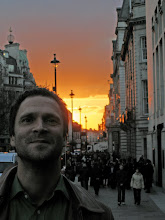
Up-date on Paris
I just thought I’d report back from Romance Central, and confirm whether or no it is still delivering on its brand. I was there principally on business, but had at least 24 hours to survey the territory as the roving reporter of Romance, and have this to report.
Yes. As I suspected, nothing essential has changed in the 4 years I was there last. It’s not just the skyline. That was as pristine in its preservation as I anticipated. And rightly so. There is also a preservation in the way things are done. The tempo and rituals of life that add up to a quintessentially Parisian ‘atmosphere’. A hard-to-define aura that pervades the very stones. Shops in the same places selling the same stuff at the same time of year, unchanged and unchanging since lord knows when. It somehow gives you hope. This nostalgia, heritage appeal, solidly sentimental clinging to the way things are done, gives it a big tick in the Romance box.
Yet, not everything was unchanged, and I didn’t think I’d live to see this. Paris bars are now non-smoking. Incroyable! Not that I find smoking attractive, or romantic. I’ve never smoked, not one single ciggie, and I thank the lord smoking has been banned in the UK. But somehow I don’t feel the same prejudice against it in the Parisian cafes and bars. A cigarette that bears the lipstick’s traces, waved in gesticulation by a sultry be-bobbed and bereted beauty, who looks icily at me through her cigarette smoke across a crowded bar is part of my fantasy picture of the café society I was happy to view from the sidelines. I suppose I’ll have to relegate that one to history now. There they were, mind, puffing and quaffing outside in the freezing cold under heaters like us Brits, so in some ways it’s business as usual. I must, however, put a cross in the Romance box for banning smoking (and this only applies to Paris).
Another thing that had changed, WAS THE BLOODY PRICE OF EVERYTHING. Strawberries were decidedly more than 7 Francs a Kilo. Things, essential things, like food, wine and fancy clobber, have gone up astronomically over the last 5 years as it is. Add to this the positive prostration of the pound against all world currencies (sterling having actually dipped below the euro), and my pleasure of swanning round Paris absorbing Romance was severely diminished. Part of the pleasure of Paris was the indulgence of senses severely chastened at home. The flâneur cedes to the gourmand in the happy hunting grounds of the boulevard bistros; the haunter of cafes will soak that much longer, with 2 or 3 glasses of an afternoon more than would be acceptable or affordable in London, and so experiences that exotic life to the full. No longer. More expensive than London now, I thought twice about flouncing into places I used to haunt with luxuriant impunity before, and spent ages scrutinizing menus before sheepishly melting away. Being here on my own, I just couldn’t justify the indulgence. Romance is a luxury, or at least the illusion of luxury, formally sustained by favourable exchange rates. (Having said this, I was travelling ‘Premium Business Class’ on Eurostar, which, for about £35 more one way, you can lig your way back into luxury. A fully stocked bar at my disposal, and with two hours to wait for my Champagne-soaked journey back to Blighty under the magic tunnel, I stepped back into St Pancras and all was right with the world and my wallet).
Eurostar, whilst not belonging to Paris, has become an essential part of experiencing it (I can’t imagine why anyone would fly there), and even though it is an innovation, just 15 years old, it actually speeds us smoothly back into the never never land of Romance. Eurostar transports this sea-girt culture over the frontiers of possibility into a continent, one connected at the furthest edge with Istanbul. Without the Disney-land pretension of actually taking what’s left of the Orient Express (for those without imagination who want their faux romance served on a silver-plated platter). Someone has actually had the good sense to burrow out of Blighty (without the commandants noticing), and then laid on a high-speed choo choo to take us to exciting lands beyond. Take a Eurostar and experience what is all but dead in the railway network generally, but richly evocative of a golden age of travel. There’s not a whiff of deliberate heritage about The Eurostar brand, but, for we Brits at least, it can't help making us sigh for a vanished age - of speed, luxury, courtesy, service. All that, and French ladies in uniforms serving you Champagne. Big tick in the Romance box as part of the Parisian experience.
Paris was covered in snow while I was there. Pristine, white-glittery fairy tale snow, making it all the more Romantic. Why? Because rare, and special and long-ago. Boy, that place knows how to deliver. And it covers us all the dog turds (one piece of essential Parisian street furniture we might readily relegate to the dustbin; but then the Parisian’s right to let his or her beastly little pooch poop where it likes is a small price to pay for the more favourable anachronisms elsewhere). And so how was it, wandering around Paris, the city for lovers, all on my Jacques Jones? Solitude was not the ideal situation to audit Paris’s brand, I admit. And yet, there kept coming to me unbidden, as a traversed the familiar unchanging cityscape, memories of earlier visitations. Visitations accompanied by the reality of ‘romance’. In other words, the ghosts of rows past. The last time I was in Paris I was in love, and yet it was the setting for the first serious row, or flip out of what turned out to be a very bumpy relationship. The reality is, you can bring a romance to the banks of the Seine, but you can’t make it drink. We didn’t row the whole time we were there, I’m glad to say, but madame was a world class sulker. So many of the scenes I visited were misted by melancholy recollection of this sentiment. By revisiting them I was able to restore them to their former, and future glory. I was accountable only to myself, and where my whim my take me under a perfect blue sky. Notre Dame soared above me, the Tour d’ Eiffel twinkled anew in the sunlight without a twinge of regret. They were wiped clean and ready for the next time, the marvellous maybe of many loves to come. Paris is indeed the city for lovers, even, perhaps especially, when you’re on your own.
Showing posts with label eurostar. Show all posts
Showing posts with label eurostar. Show all posts
Sunday, 11 January 2009


Tuesday, 6 January 2009
We’ll always have Paris II
When Bogey uttered those immortal words, which sealed the doom for his immediate happiness, but ensured the eternal flame of romance’s most iconic (un)happy ever afters, the choice of location was far from arbitrary. Or rather, the fact that it was Paris and not, well… [substitute just about any location] … plays no small part in the potency of his romantic renunciation. Paris, occupied by barbarians, was a precious, fragile treasury of all that was worth fighting for, and returning to in peace time. Paris is always somewhere to return to in peace time, in spring time, in love time. Paris is always always.
This is the first major icon / cliché of romance I’ve attempted to take on, on its own right. I’m not really capable of doing justice to it, as this is a big big question, the surface of which I can only skim here (like the creamy foam on a Café au lait, grazed dreamily a a Boulevard Café). You see, it’s very difficult not to employ clichés when dealing with Paris, and especially so when tackling the whole Paris = romantic platitude. It is perhaps one of the biggest truisms in romance’s repertoire, and one of the most consistent and coherent ideas ever held about a place. Although we have pretty clear ideas about New York, Rome, Tokyo, London, only Paris has a universally agreed adjective attributed to it.
But why, and, more importantly, when? If I had time, and the British Library had been open when I was pondering this question, I might have backed up the following speculations with a bit of substance. I might just do that when I get the chance; but now I’m going to hazard a guess it was between the wars when Paris became officially ‘romantic’. This idea was obviously fully-formed by 1942, but I don’t think was there in the 19th century, and was certainly not there before that. Paris was sexy, racy, daring, naughty before ‘romantic’ became its official descriptor. This might have contributed to and evolved into the later idea, but it had a different association and value at the time. It meant licence and libertarianism to the Anglo-American imagination, stifled by puritan propriety and prohibition. And this was firmly associated with a progressiveness. Paris was a modern city. It had chopped heads off kings, planned its streets on rational lines, and was at the forefront of what we would now quaintly call ‘sexual permissiveness’. Finally, the official style of Paris’s greatest, most iconic moment was self-consciously Nouveau.
New is not romantic. Paris became romantic when the rest of the world underwent its own revolutions and cataclysms, and Paris was looked to to embody and preserve a vanishing or just vanished order. Fortunately for the rest of the world, the conservative, chauvinistic side of the French mentality came to the fore, and decided to deliver on our demands, and manage the Paris brand rigorously by allowing very little change. The periphique stops it sprawling, like London; the French mind rightly resists the incursion of Starbucks et al., and someone in the planning dept at the Hôtel de Ville, has obviously decreed that the river skyline will change over his dead body. I’m pretty much certain that I could stand on the Pont de la Tournelle and look at Notre Dame and beyond tomorrow, and find the view pretty much as I left it exactly four years ago. Which is exactly what I intend to do, as I’m going to Paris on a flying visit, and this is why I’m prompted to prematurely pontificate on this question.
Paris is romantic because it has made the preservation of an epoch, la belle epoch, part of its official identity, and sealed the idea in. And it is this we re-visit, in recollection, and reality. ‘At the age of 37, she realised she’d never ride through Paris, in a sports car, with the warm wind in her hair’ ('Ballad of Lucy Jordan') - never really love, in other words. Not like Bogart and Bergman (I’m sure it’s a reference to Casablanca, and the flashbacks to Rick, actually smiley and looking soppy at Ilsa in an open top car). Last Tango in Where? Why not Buenos Aires? As it nearly all takes part in an apartment, truly it could have been anywhere. But then, truly it couldn’t.
Talking of apartments, there is a very stylish French Film called L’Appartement, which I’ve seen about 3 times now, and I still can’t work out exactly what goes on. It’s some kind of tricksy mystery about the exchange of identities between two very saucy and chic brunettes, who are chased all over Paris by a young man. The problem is, I can’t pay attention to the plot, as I’m too busy following two very saucy and chic brunettes all over Paris, and couldn’t give a stuff about the intrigue. The first time I saw it I wandered out of the cinema in a daze, and couldn’t speak for about 10 minutes. I swear, if I’d had my passport with me, I’d have caught the first Eurostar to Paris and joined in the sport. No mater how saucy the ladies, I would not have considered boarding a train so recklessly to anywhere else.*
Eurostar. Now there’s a romantic spot. Forget about that simply absurd statue they’ve erected. Sit there one afternoon in a bar; drink Champagne, and simply watch the trains depart. Sigh, dream, recollect, regret, and have another sip of Champagne, and watch another train. One day, just maybe… with the warm wind in your hair.
* A few years after watching that film, indeed a few months after my Faintheart at Holborn Tube incident nearly 8 years ago, I went to Paris, and met a young lady in a shoe shop. She was working there while a student, and the shoes were rather nice. I bought 2 pairs out of guilt for having spent so long chatting to her, and we spent the next year taking it in turns to commute by Eurostar. And then? Well, I think I have one of the shoes somewhere.
Subscribe to:
Posts (Atom)